
The trigger for international gold prices rising to $3,000 per ounce was Germany's upcoming heavy government borrowing.

Few finance ministers announce any taxation measure that could upset the stock market. Ms Sitharaman decided to take that risk, observes A K Bhattacharya.

'They think quick fixes like internship in the private sector will help. 'In fact, internships have been going on for the last one decade.' 'In 2014-2015 itself, we had a ministry of skill development. None of the programmes have yielded results, still they are continuing with such schemes under some other name.' 'We don't see any seriousness on the part of the government to attack the problem of unemployment.'

Ahead of the 2023-24 Union Budget, the thinking at the top level of the central government is clear: Gross domestic product (GDP) growth of 6-6.5 per cent is a comfortable enough target for FY24 and the focus should be on fiscal consolidation to ensure that the sovereign cost of borrowing does not become prohibitively expensive in a high-interest rate environment, according to people in the know. Those aware of deliberations between the Prime Minister's Office (PMO) and the Ministry of Finance said while the Budget would look to strike a balance between infrastructure investment and welfare schemes, it is unlikely to be populist, though it will be the last full-year Budget before the 2024 Lok Sabha election. Incidentally, 6-6.5 per cent GDP growth is what the upcoming 2022-23 Economic Survey is expected to project for FY24.

The average age of the 125-billion strong Indian population will be 29 years in 2020, even younger than China and the US.

Brokers believe that the higher charges may not completely deter investors from taking bets in F&O but could help cool down some activity, as the threshold to break even rises.

The bad loans of public sector banks were at 4.4 per cent in March 2014 compared with 2.09 per cent in 2008-09, it said, adding, the gross NPA increased by almost four times from March 2010 (Rs 59,972 crore or Rs 599.72 billion) to March 2014 (Rs 2,04,249 crore or Rs 2,042.49 billion).

'There is a great scope for enhancing the use of organic fertilisers'.

It will be interesting to see what shifts have been recorded in the last decade-and-a-half -- from the effects of demonetisation and Covid's second wave to the drop in fertility and increase in farm workers -- but we will only know this if and when the Census is conducted, points out Aakar Patel.

The survey, however, said that GDP is expected to revert to growth terrain next year, when it is likely to grow by 7.2 per cent.

As the Congress batted for a national caste census with an assertion that rights should be proportionate to population, its senior leader Abhishek Singhvi on Tuesday created a flutter by saying "it will eventually culminate into majoritarianism", a remark he later withdrew from social media and blaming it on his staff.

RBI expected wholesale prices-based inflation, which is near the double-digit region now, to moderate over the next few months but warned of upside risks owing to firming global commodity prices, particularly oil.

'I tell young entrepreneurs if you don't have a great idea, if you don't have a good business model, don't think of a start-up.'

The encouraging news, however, is that India features among the top four countries out of 44 nations that projected a positive hiring trend.

The Finance Ministry expects the economic growth in the current fiscal to improve to 5.5 per cent from 5 per cent last year on back of likely pick up in agricultural output on account of good monsoon rains.

While this will incur a revenue loss amounting to 0.2 per cent of GDP, it will provide a strong boost to consumer sentiment and spending, points out Rajani Sinha.

RBI's latest rate cut is positive for the economy.

Banking on the Budget's tax relief, the BJP seeks to energise Delhi's middle class; the AAP is doing its bit too. But will their outreach mobilise this politically crucial yet disengaged electorate?
The unemployment rate for persons of 15 years and above in urban areas slipped to 8.7 per cent in October-December 2021 from 10.3 per cent in the year-ago quarter, showed a periodic labour force survey by the National Statistical Office (NSO). Joblessness or unemployment rate (UR) is defined as the percentage of unemployed persons in the labour force. Joblessness was high in October-December in 2020 mainly due to the staggering impact of the lockdown restrictions in the country, which were imposed to curb the spread of the deadly coronavirus.
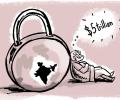
In order to achieve $5 trillion GDP by FY'25, India needs to spend about $1.4 trillion over this period on infrastructure, according to the Economic Survey. During financial years 2008-17, India pumped in about $1.1 trillion on infrastructure. However, the challenge is to step up infrastructure investment substantially, the Economic Survey 2021-22 said.
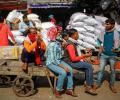
The Economic Survey will remain a documentation of the government's resolve to not recognise the severe stress on the labour markets and on the livelihoods of Indian households arising out of the pandemic and the consequent lockdown, observes Mahesh Vyas.

For the first time, more than half of the CEOs surveyed by global consultancy PwC said they believe the rate of global GDP growth will decline. In comparison, the survey had found a record level of optimism among CEOs two years ago in 2018.

Delhi Health Minister Satyendar Jain said on Tuesday 56.13 per cent of those covered under the latest serological survey in the city in January have developed antibodies against coronavirus.

There are a number of steps taken that will leave more money in the hands of the taxpayers.
These include the reduction in tax rates under the new tax regime, increase in standard deduction, allowing tax collected at source to be adjusted against tax deducted at source from salaries, notes Harsh Roongta.

Inaugurating the Grameen Bharat Mahotsav, the Prime Minister exuded confidence that villages will play a key role in pushing forward the dream of Viksit Bharat by 2047.

'Obesity, especially central obesity and increased visceral fat due to physical inactivity, along with the consumption of high-calorie, high-fat, and high-sugar diets, are major contributing factors.'

The ministry of finance is likely to assume crude oil price to remain within $85 per barrel while estimating subsidies for the Interim Budget 2024-25 (FY25), to be presented on February 1. Brent crude prices moved up on Thursday, ending at $78.9 per barrel. Crude oil and cooking gas prices, which move in tandem, impact fertiliser and cooking gas subsidies, constituting 53 per cent of the government's total subsidies.

'It feels like Assam is good just as a tourist spot and not a place to earn and live.'

'Disengagement is merely the first step in a lengthy process of arriving at a new normal along the LAC in Eastern Ladakh and the entire land boundary.' 'The Indian government should insist on the restoration of the status quo ante in Eastern Ladakh.'

Watch all the debates and discussions in Parliament

In Round 1, 62 per cent strongly supported the continuation of the lockdown and 24 per cent expressed some support.

Unemployment rate for all ages in urban areas rose to 9.3 per cent in January-March 2021 from 9.1 per cent in the same month of the previous year, showed a periodic labour force survey by the National Statistical Office (NSO). Joblessness or unemployment rate (UR) is defined as the percentage of unemployed persons in the labour force. The UR for in CWS (current weekly status) in urban areas for persons of age 15 years and above was 10.3 per cent in October-December 2020, the ninth Periodic Labour Force Survey (PLFS) showed.

'It is the responsibility of industry to take the very bright talent whose knowledge of software engineering basics is very high, and then give them additional skills.'
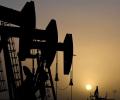
A substantial deposit of petroleum and natural gas has been discovered in Pakistan's territorial waters, a cache so large its exploitation could change the country's destiny, according to a media report. A three-year survey was undertaken in collaboration with a friendly country to verify the presence of the oil and gas reserves, DawnNewsTV quoted a senior security official as saying on Friday.

Markets rallied because of huge inflows by overseas investors.
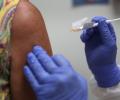
Around two-thirds or 70 per cent of employers surveyed would either not allow employees, who refuse to get vaccinated to step into the workplace or ask them to quit the organisation. It also showed that 94 per cent employers and 87 per cent employees want people coming in to work to be vaccinated with at least a single dose.

'The BJP lacks a credible mass leader who matches Mamata Banerjee's popularity.' 'Given the division of votes among Opposition parties, the West Bengal government's dole-giving strategy, and the consolidation of the poor, significant sections of scheduled caste groups and Muslim minorities behind the ruling party, it will be difficult to dislodge the Trinamool from power.'

'Trump's disregard for norms and institutions could prove very costly for America's social fabric.'

India's services sector growth recorded another month of robust expansion in July, albeit at a slightly slower pace than in June, largely supported by robust demand conditions and investment in technology, a monthly survey said on Monday. The seasonally adjusted HSBC India Services Business Activity Index was at 60.3 in July, down only fractionally from 60.5 in June. In the Purchasing Managers' Index (PMI) parlance, a print above 50 means expansion, while a score below 50 denotes contraction.

A bill will be brought in the assembly during the ongoing session, possibly this week according to sources in the cabinet.
